


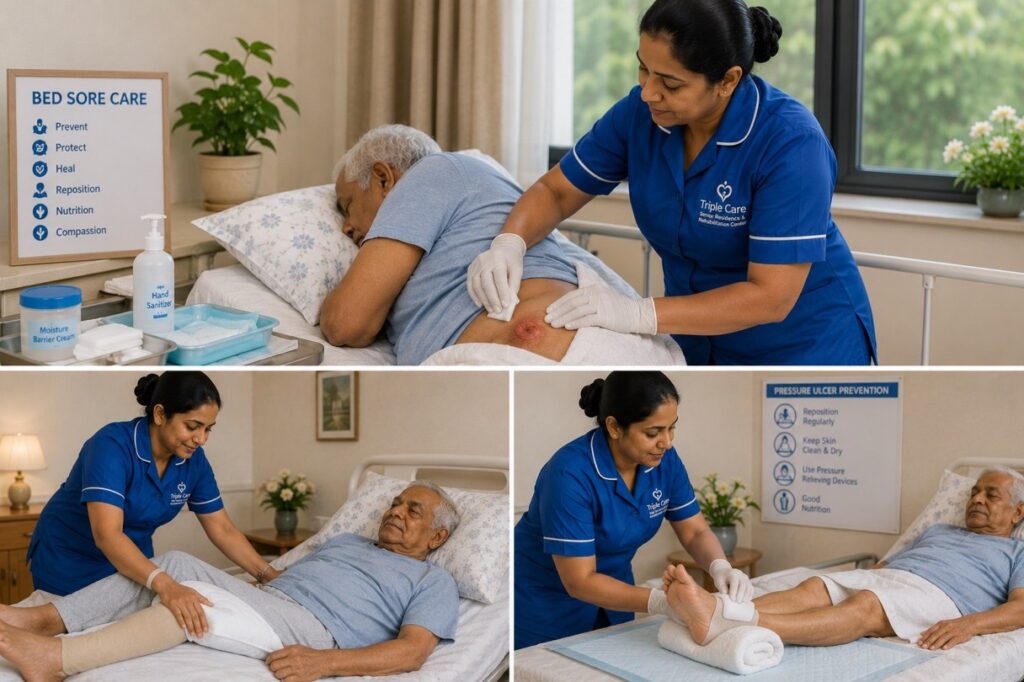
Caring for an elderly person who spends most of the day in bed or has very limited mobility requires careful attention to their skin, positioning, nutrition, hygiene, and overall wellbeing. One important concern for families caring for bedridden elderly patients is the development of bed sores, also known as pressure sores or pressure injuries.
Bed sores can develop when prolonged pressure affects the skin and underlying tissues, particularly over bony areas of the body. Elderly people who are bedridden, use wheelchairs, have reduced mobility, or depend on others for repositioning may have a higher risk.
For families searching for bedridden patient care in Sri Lanka or professional elderly care in Kurunegala, understanding bed sore prevention and knowing when professional medical attention is required can help protect an elderly loved one’s comfort and wellbeing.
For families searching for bedridden patient care in Sri Lanka or professional elderly care in Kurunegala, understanding bed sore prevention and knowing when professional medical attention is required can help protect an elderly loved one’s comfort and wellbeing.
At Triple Care Senior Residence & Rehabilitation Center in Kurunegala, Sri Lanka, elderly residents can receive residential care and assistance with everyday activities while continuing to follow medical advice provided by their doctors.
What Are Bed Sores?
Bed sores are areas of skin and underlying tissue damage associated with prolonged pressure or pressure combined with friction or shear.
They commonly occur over areas where bones are close to the skin.
- Heels
- Ankles
- Hips
- Tailbone and lower back
- Elbows
- Shoulders
- Back of the head
Bed sores can range from early skin changes to deeper wounds. Because pressure injuries can become serious, families should not wait for a wound to become severe before seeking professional advice.
Why Are Elderly and Bedridden Patients at Risk?
An active person naturally changes position throughout the day. A bedridden elderly person may be unable to do this independently.
When pressure remains on one area for too long, the tissues can be affected.
Risk can be higher for elderly people who:
- Cannot move independently
- Spend long periods in bed
- Use a wheelchair for extended periods
- Have reduced sensation
- Have fragile or thin skin
- Have poor nutrition or reduced appetite
- Experience incontinence
- Have conditions affecting circulation
- Are recovering after surgery or illness
- Have neurological conditions
- Have significant weakness or frailty
This is why professional care for bedridden elderly patients should include regular skin observation and an individual plan for mobility and repositioning.
Early Signs of a Bed Sore
Early identification is important.
Caregivers should regularly observe the skin, particularly around pressure points.
Possible warning signs include:
- Persistent redness or discoloration
- Skin that feels unusually warm or cool
- Swelling
- Tenderness or pain
- Changes in skin texture
- Blisters
- Broken skin
- An open wound
On darker skin tones, early pressure damage may not always appear as obvious redness. Changes in colour, temperature, firmness, swelling, or discomfort can also be important.
If a suspicious area is found, appropriate healthcare advice should be obtained rather than attempting to diagnose the severity at home.
How Can Bed Sores Be Prevented?
Prevention is an important part of bedridden patient care in Sri Lanka.
There is no single method that prevents every pressure injury. Instead, prevention usually involves several aspects of daily care.
1. Regular Repositioning
A person who cannot move independently may need assistance to change position.
A suitable repositioning schedule depends on the person’s condition, mobility, skin health, support surface, comfort, and professional assessment.
Caregivers should therefore follow an individual care plan rather than assuming that one fixed schedule is suitable for every elderly person.
When repositioning, unnecessary dragging across the bed should be avoided because friction and shear can damage fragile skin.
2. Daily Skin Observation
Regularly inspect pressure-prone areas such as the:
- Heels
- Ankles
- Hips
- Lower back
- Tailbone
- Elbows
- Shoulders
Look for redness, discoloration, swelling, moisture damage, broken skin, or other changes.
Early recognition allows professional assessment to take place before a problem becomes more severe.
3. Keep Skin Clean and Dry
Moisture from urine, stool, perspiration, or wound drainage can contribute to skin problems.
Bedridden elderly people may require assistance with:
- Bed bathing
- Diaper changing
- Continence care
- Drying the skin appropriately
- Changing wet clothing
- Changing bed linen
- Maintaining general personal hygiene
This makes consistent personal care particularly important for elderly people who depend entirely on caregivers.
4. Appropriate Mattresses and Pressure-Relieving Equipment
Some patients may benefit from pressure-redistributing mattresses, cushions, heel protection, or other equipment.
The appropriate equipment depends on the individual’s level of risk and medical condition.
A healthcare professional should advise families when specialised pressure-relieving equipment is required.
5. Nutrition and Hydration
Nutrition is important for general health and skin integrity.
Elderly people may sometimes eat less because of illness, swallowing difficulties, dementia, reduced appetite, medication effects, or other health problems.
Meals should be appropriate for the individual’s nutritional and medical needs.
Hydration is also important for many elderly people, but fluid requirements vary. People with kidney, heart, or other medical conditions may have specific fluid restrictions.
Families should follow healthcare advice regarding nutrition and hydration.
What If a Bed Sore Has Already Developed?
Once skin damage or an open wound is present, professional assessment becomes important.
Treatment depends on factors such as the depth and location of the wound, signs of infection, the patient’s circulation, nutrition, mobility, and underlying health conditions.
Professional management may involve:
- Pressure relief
- Appropriate wound assessment
- Wound cleaning
- Suitable dressings
- Moisture management
- Skin protection
- Nutritional assessment
- Management of underlying medical conditions
- Monitoring for infection
- Medical or wound-care review
Families should avoid applying unprescribed substances, creams, powders, herbal preparations, or home remedies directly to an open wound without appropriate professional advice.
Signs That Require Prompt Medical Attention
Seek appropriate medical care if a wound:
- Becomes deeper or larger
- Develops increasing redness or swelling
- Produces unusual or increasing drainage
- Develops an unpleasant smell
- Becomes increasingly painful
- Shows dark or damaged tissue
- Is accompanied by fever
- Is associated with a significant deterioration in the patient’s condition
Bed sores can sometimes involve deeper tissues even when the surface appearance seems limited. Professional assessment is therefore important.
Bed Sore Care and Diabetes
Extra attention may be required when an elderly person has diabetes.
Diabetes can be associated with changes in circulation, sensation, and wound healing. This means that skin injuries should be taken seriously and appropriately assessed.
Families caring for an elderly person with both diabetes and a pressure injury should follow the treatment and monitoring plan provided by qualified healthcare professionals.
This is also a useful opportunity to connect families with information about diabetes care for elderly patients in Sri Lanka.
Bed Sore Care for Elderly Patients With Limited Mobility
Bed sore prevention should be considered as part of the person’s complete daily-care routine.
A bedridden resident may require assistance with:
- Repositioning
- Bathing
- Toileting
- Diaper changing
- Skin observation
- Feeding
- Hydration according to medical advice
- Medication routines
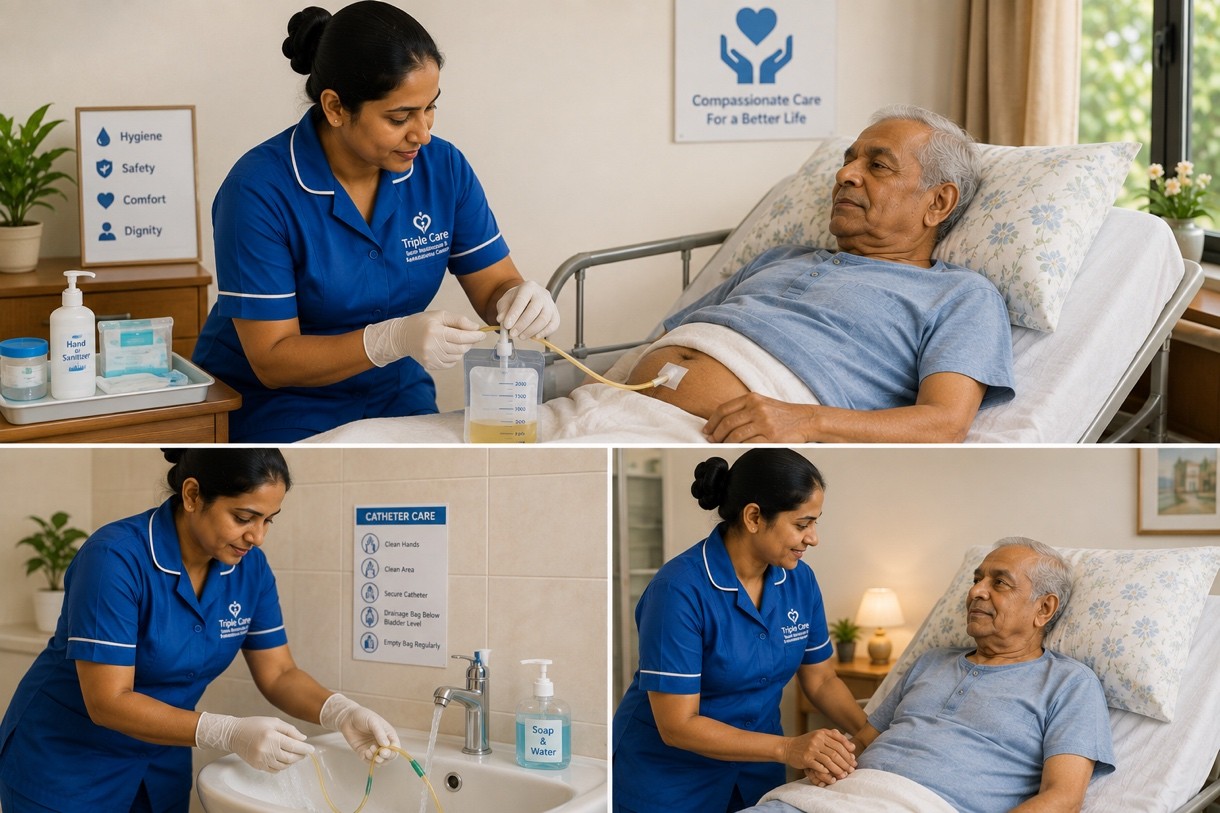
- Catheter care
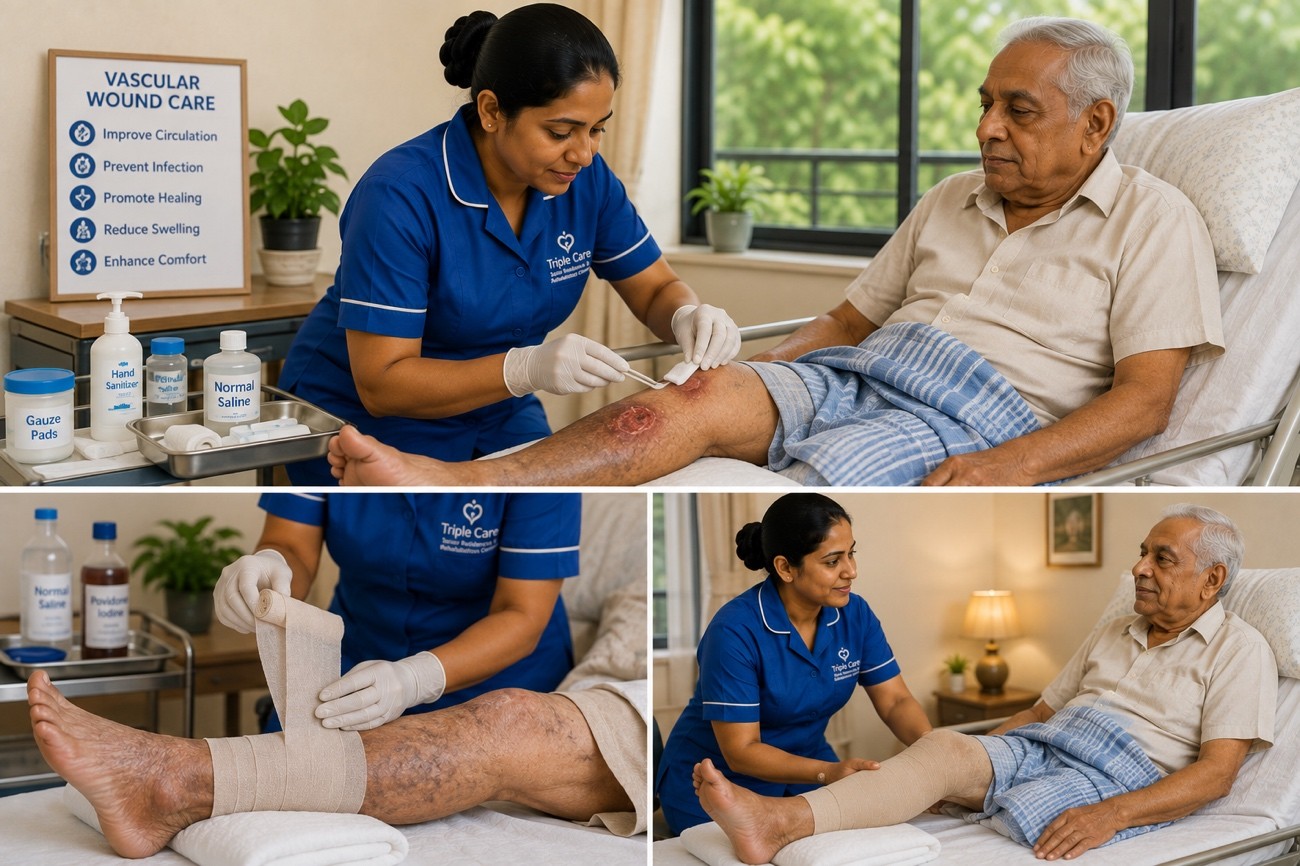
- Wound care
- Mobility exercises
- Physiotherapy where appropriate
For families, coordinating all of these activities every day can become difficult, particularly when relatives are working or living far away.
How Professional Elderly Care Can Help Families
Professional elderly nursing care in Sri Lanka can provide a structured environment for people who require significant assistance with daily activities.
Instead of relying on one family member to manage bathing, feeding, toileting, repositioning, medication routines, wound observation, and other responsibilities, care can be organised around the elderly person’s individual needs.
A professional elderly care environment may be particularly useful for:
- Bedridden elderly people
- Seniors recovering after surgery
- People with limited mobility
- Stroke patients
- People living with dementia
- Elderly people requiring catheter care
- Residents requiring wound-related support
- Seniors who need assistance with most daily activities
Families should always discuss the person’s medical and nursing requirements with a care provider before admission.
Bedridden and Elderly Care at Triple Care Senior Residence
Triple Care Senior Residence & Rehabilitation Center provides residential elderly care in Kurunegala, Sri Lanka, for senior citizens with different levels of daily-care requirements.
Depending on the resident’s individual needs, relevant support may include:
- Assistance for bedridden residents
- Nursing-attendant support
- Regular personal hygiene assistance
- Bed bathing
- Diaper and continence care
- Repositioning assistance
- Daily skin observation
- Feeding assistance where required
- Medication routine support
- Catheter-related daily care
- Wound-related support according to professional instructions
- Mobility assistance
- Access to physiotherapy where appropriate
- Three main meals and two tea servings daily
- Laundry and ironing
- Weekly opportunities for medical review
- Coordination of external medical care when necessary
Residents with existing bed sores or complex wounds should have their condition and care requirements discussed before admission so that appropriate arrangements can be considered.
Diagnosis, wound classification, prescription of treatment, and management of serious or infected wounds require appropriately qualified healthcare professionals.
Choosing an Elderly Care Home for a Bedridden Parent
Families searching for a care home for elderly parents should look beyond accommodation alone.
If your parent is bedridden or has limited mobility, ask:
- How are bedridden residents repositioned?
- How frequently is their skin observed?
- How is personal hygiene managed?
- How are diapers and continence needs handled?
- What happens if a bed sore develops?
- Can existing wounds be supported?
- How is professional wound care arranged?
- Is physiotherapy available?
- How are meals and feeding assistance managed?
- How are families informed about significant health changes?
A suitable elderly care home in Kurunegala should understand the resident’s individual condition before admission and clearly explain what level of support can be provided.
The Importance of Dignity and Comfort
Bedridden elderly people may depend on another person for almost every part of their daily routine.
Good care is therefore not only about preventing bed sores.
It should also protect the person’s dignity, privacy, comfort, emotional wellbeing, cleanliness, and connection with their family.
Simple actions such as speaking respectfully, explaining what is being done, maintaining personal hygiene, providing comfortable positioning, and allowing family interaction can make a meaningful difference to an elderly person’s daily experience.
Conclusion
Bed sore care for elderly and bedridden patients in Sri Lanka begins with prevention, careful skin observation, appropriate repositioning, hygiene, nutrition, and early professional assessment when skin changes appear.
Once a pressure injury develops, appropriate wound assessment and treatment are important to reduce the risk of further complications.
For families searching for bedridden patient care, elderly nursing care, or an elderly care home in Kurunegala, Triple Care Senior Residence & Rehabilitation Center provides residential support for elderly people with different levels of dependency.
Contact Triple Care
If your mother, father, grandparent, or another elderly family member is bedridden, has limited mobility, or requires ongoing daily care, contact Triple Care Senior Residence & Rehabilitation Center to discuss their individual requirements.
Families can enquire about residential elderly care, accommodation, nursing-attendant support, rehabilitation-related services, and arrangements for residents requiring additional care.
You are also welcome to arrange a visit and learn more about the care environment available in Kurunegala.
Medical Disclaimer: This article is intended for general educational purposes and does not replace medical advice. Existing pressure injuries, open wounds, suspected infections, and significant skin changes should be assessed by appropriately qualified healthcare professionals.
Frequently Asked Questions
1. What causes bed sores in elderly people?
Bed sores are associated with prolonged pressure, particularly in people who cannot change position independently. Friction, shear, moisture, poor nutrition, reduced mobility, and certain health conditions can also increase risk.
2. How can bed sores be prevented in bedridden elderly patients?
Prevention can include appropriate repositioning, regular skin observation, good hygiene, moisture management, suitable support surfaces, nutrition, hydration according to medical advice, and professional risk assessment.
3. How often should a bedridden elderly person be repositioned?
There is no single schedule suitable for everyone. Repositioning frequency should be based on the person’s condition, skin health, mobility, support surface, comfort, and professional care plan.
4. Can an elderly care home support a patient with bed sores?
Some elderly care facilities can provide daily support for residents with pressure injuries while coordinating appropriate medical or wound-care services. The person’s wound condition and care requirements should be discussed before admission.
5. Where can families find bedridden elderly care in Kurunegala?
Families can look for residential elderly care services in Kurunegala that provide assistance with hygiene, repositioning, feeding, continence care, mobility, and coordination of healthcare. Triple Care provides residential elderly care in Kurunegala and can discuss individual care requirements with families.