

Catheter Care for Elderly Patients in Sri Lanka: A Practical Guide for Families
Caring for an elderly parent who uses a urinary catheter can be challenging for families. Older adults may already need assistance with bathing, toileting, mobility, medication, meals, or other daily activities. When catheter care is added to these responsibilities, consistent hygiene, careful observation, and appropriate professional support become especially important.
For families looking for elderly nursing care in Sri Lanka, understanding basic catheter care can help them recognise problems early and provide safer daily support.
At Triple Care Senior Residence & Rehabilitation Center in Kurunegala, Sri Lanka, residential elderly care is available for senior citizens with different levels of daily-care needs, including those who may require additional assistance due to limited mobility, bedridden conditions, dementia, or ongoing health concerns.
What Is a Urinary Catheter?
A urinary catheter is a flexible tube used to drain urine from the bladder into a collection bag.
An elderly person may require a catheter temporarily or for a longer period depending on their medical condition. The need for a catheter should be determined by an appropriately qualified healthcare professional.
Some reasons a catheter may be required include:
- Difficulty emptying the bladder
- Urinary retention
- Certain neurological conditions
- Recovery following some surgical procedures
- Severe mobility limitations
- Certain bladder or urinary conditions
- Other medical reasons determined by a healthcare professional
Catheter insertion, replacement, and removal should be performed by appropriately qualified professionals according to the patient’s care plan.
Why Is Proper Catheter Care Important for Elderly Patients?
Good catheter care focuses on maintaining hygiene, comfort, safe drainage, and early identification of possible complications.
Older adults may be particularly dependent on caregivers if they have poor mobility, weakness, cognitive impairment, or a bedridden condition.
Daily catheter support therefore requires attention and consistency.
Potential problems associated with catheter use can include infection, blockage, leakage, discomfort, skin irritation, and accidental displacement.
Caregivers should never assume that every change is normal simply because the patient has been using a catheter for a long time.
Daily Catheter Care for Elderly Patients
Maintain Good Hygiene
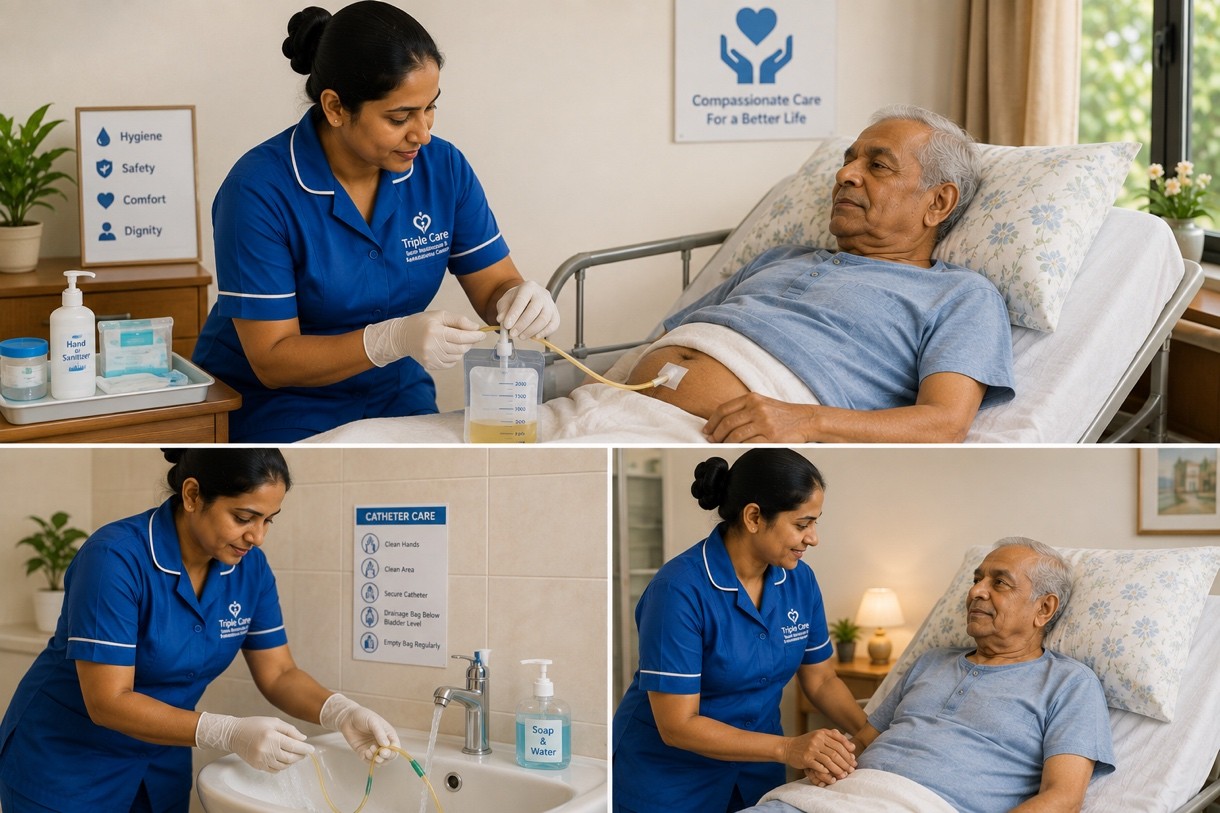
Hand hygiene is essential.
Hands should be cleaned before and after handling the catheter, tubing, drainage bag, or surrounding area.
The area where the catheter enters the body should be kept appropriately clean according to instructions provided by the patient’s healthcare team.
During bathing, diaper changing, dressing, or personal hygiene routines, caregivers should take care not to accidentally pull or twist the catheter.
Keep the Drainage Bag Correctly Positioned
The urine drainage bag generally needs to remain below the level of the bladder to support drainage.
The tubing should be positioned so that it is not:
- Twisted
- Kinked
- Compressed
- Pulled tightly
- Accidentally trapped under the patient
When transferring an elderly person from a bed to a chair or wheelchair, caregivers should check the catheter and bag before, during, and after the transfer.
Observe Urine Drainage
Caregivers should regularly observe whether urine appears to be draining into the collection bag.
Important changes may include:
- Little or no urine draining
- Significant leakage around the catheter
- Blood in the urine
- Unusual changes in urine appearance
- Pain or discomfort
- Lower abdominal discomfort
- Catheter displacement
A healthcare professional should be contacted when there are concerning changes.
Recognising Possible Catheter-Related Problems
Families caring for an elderly catheter user should know which signs may require medical attention.
These can include:
- Fever or chills
- New or worsening pain
- Significant blood in the urine
- Little or no urine drainage
- Significant leakage
- Catheter displacement
- Lower abdominal discomfort
- New or significant confusion
- Sudden deterioration in the patient’s general condition
- Signs suggesting a blockage or infection
These symptoms can have different causes. A qualified healthcare professional should determine what is happening and what treatment is necessary.
Do not attempt to replace or remove a catheter without appropriate training and authorisation.
Catheter Care for Bedridden Elderly Patients
Catheter care can become more demanding when an elderly person is bedridden.
A bedridden patient may be unable to independently manage hygiene, repositioning, toileting, or the drainage bag.
Daily support may therefore include:
- Bed bathing and personal hygiene
- Catheter hygiene
- Diaper and continence care
- Safe drainage-bag positioning
- Repositioning
- Skin observation
- Bed linen changes
- Feeding assistance
- Medication routine support
- Monitoring fluid intake according to medical advice
Families searching for bedridden patient care in Sri Lanka should discuss these requirements with a care provider before admission.
Catheter Care for Elderly Patients With Dementia
Dementia can create additional challenges.
A person living with dementia may not remember why a catheter is present. They may become confused by the tubing or attempt to pull it.
Caregivers may need to provide closer observation, calm reassurance, appropriate positioning, and assistance with personal care.
Sudden confusion or a significant change in behaviour should not automatically be assumed to be part of dementia. It may sometimes indicate a new health problem and should be appropriately assessed.
Catheter Care and Hydration
Adequate hydration can be important for many elderly people, but fluid requirements vary according to the person’s health.
Some individuals with kidney disease, heart conditions, or other medical problems may have specific fluid recommendations or restrictions.
Caregivers should therefore follow the patient’s healthcare instructions rather than automatically encouraging excessive fluid intake.
Maintaining Skin Health
Catheter users may also require careful skin monitoring, especially when they are bedridden or use diapers.
Moisture, pressure, friction, and reduced mobility can contribute to skin problems.
Daily care should include appropriate hygiene and observation for:
- Redness
- Irritation
- Swelling
- Broken skin
- Pressure areas
- Unusual discharge
Skin changes that persist or worsen should receive appropriate professional attention.
How Professional Elderly Care Can Help
Catheter care is often only one part of an elderly person’s overall care requirements.
The same person may also need assistance with:
- Bathing
- Dressing
- Toileting
- Diaper changing
- Medication routines
- Eating and drinking
- Walking
- Transfers between bed and chair
- Repositioning
- Dementia-related care
- Bed sore prevention
- Wound care
- Physiotherapy
- Medical appointments
Providing this level of assistance every day can be difficult for families, particularly when family members work, live in another city, or live overseas.
A professional care home for elderly parents can provide structured residential support while families remain involved in their loved one’s care.
Catheter Care and Elderly Nursing Support at Triple Care
Triple Care Senior Residence & Rehabilitation Center provides professional residential elderly care in Kurunegala for senior citizens with different levels of dependency.
Depending on the resident’s individual requirements, relevant support may include:
- Nursing-attendant assistance
- Personal hygiene and bathing assistance
- Continence and diaper care
- Assistance for bedridden residents
- Catheter-related daily support according to professional instructions
- Mobility and transfer assistance
- Repositioning support
- Medication routine assistance
- Feeding assistance when required
- Three main meals and two tea servings daily
- Laundry and ironing
- Weekly opportunities for medical review
- Coordination of external medical treatment when necessary
- Physiotherapy access where appropriate
- Rehabilitation-related support
For a resident who already uses a catheter, the person’s medical condition, catheter type, mobility, medications, existing healthcare instructions, and level of assistance required should be discussed before admission.
Triple Care’s residential support complements appropriate medical care. Catheter insertion, replacement, removal, diagnosis of urinary conditions, and treatment of infections should be handled by appropriately qualified healthcare professionals.
Choosing an Elderly Care Home for a Catheter User
If you are looking for an elderly care home in Kurunegala for a parent who uses a catheter, ask practical questions before making a decision.
Consider asking:
- Can the facility support residents who use urinary catheters?
- Who provides daily hygiene assistance?
- How are bedridden residents supported?
- How are catheter-related changes monitored?
- What happens if the catheter becomes blocked or displaced?
- How is medical assistance arranged?
- Is support available during the night?
- How are family members informed about significant changes?
- Can external doctor visits or hospital appointments be coordinated?
A suitable senior residence in Kurunegala should be willing to discuss the resident’s individual needs before admission.
Supporting Families as Well as Elderly Residents
Caring for an elderly parent with increasing medical and personal-care needs can require considerable time and coordination.
Professional senior care can help provide continuity in daily routines while allowing family members to focus more on emotional support, companionship, and important decisions.
Choosing residential care does not mean that the family stops caring for their loved one. In many situations, it means creating a partnership between the elderly person, family, caregivers, and healthcare professionals.
Conclusion
Proper catheter care for elderly patients in Sri Lanka requires attention to hygiene, safe drainage, skin health, comfort, and early recognition of possible problems.
This becomes especially important for elderly people who are bedridden, have dementia, or depend on others for their daily activities.
For families searching for elderly nursing care in Kurunegala, Triple Care Senior Residence & Rehabilitation Center provides residential care, accommodation, daily assistance, and rehabilitation-related support based on individual needs.
Contact Triple Care Senior Residence & Rehabilitation Center
If your mother, father, grandparent, or another elderly family member uses a catheter and requires residential support, contact Triple Care to discuss their individual care requirements.
Families are welcome to enquire about available accommodation and services or arrange a visit to learn more about elderly care options in Kurunegala.
Medical Disclaimer: This article provides general educational information and should not replace advice from a doctor, nurse, or other qualified healthcare professional. Catheter insertion, replacement, removal, diagnosis, and treatment should be managed by appropriately qualified healthcare professionals.
Frequently Asked Questions
1. How should a catheter be cared for in an elderly patient?
Daily catheter care generally involves good hand hygiene, keeping the catheter area appropriately clean, preventing unnecessary pulling or kinking of the tubing, correctly positioning the drainage bag, and observing for unusual changes. Follow the patient’s healthcare instructions.
2. What are signs of a catheter problem in an elderly person?
Possible warning signs include fever, pain, significant leakage, blood in the urine, little or no urine drainage, catheter displacement, sudden confusion, or a significant deterioration in the person’s condition. Seek appropriate medical advice.
3. Can bedridden elderly patients receive catheter care?
Yes. When catheter use is medically indicated, bedridden patients can receive daily assistance with catheter hygiene, drainage-bag management, continence care, repositioning, and other personal-care requirements.
4. Can an elderly care home support a resident with a catheter?
Some elderly care facilities can provide daily catheter-related assistance according to healthcare instructions. Families should explain the resident’s condition and confirm exactly what services the facility can provide before admission.
5. Is catheter care support available for elderly patients in Kurunegala?
Residential elderly care providers in Kurunegala may support elderly residents who use catheters as part of their daily care needs. Triple Care provides residential elderly care in Kurunegala and can discuss individual care requirements with families.