

Caring for an elderly parent with diabetes involves much more than simply avoiding sugar. Older adults may need help with regular meals, medications, blood glucose monitoring, mobility, foot care, medical appointments, and recognising changes in their general health.
For families, managing all of these responsibilities can become difficult, particularly when an elderly person is living alone, has memory problems, has reduced mobility, or requires assistance throughout the day.
Diabetes is a long-term health condition in which blood glucose levels become too high. With appropriate medical treatment, lifestyle management, regular monitoring, and support, many people with diabetes can manage their condition effectively.
For families searching for professional elderly care in Sri Lanka, elderly nursing care in Kurunegala, or a care home for elderly parents with diabetes, it is important to choose a care arrangement that supports both the person’s diabetes management plan and their overall wellbeing.
At Triple Care Senior Residence & Rehabilitation Center in Kurunegala, Sri Lanka, elderly residents can receive residential care and assistance with everyday activities while continuing to follow medical advice provided by their doctors.
Why Diabetes Care Can Be More Challenging for Elderly People
Managing diabetes often requires following several routines consistently.
An elderly person may need to remember medication times, eat meals at appropriate times, attend medical appointments, monitor blood glucose when advised, remain physically active within their abilities, and watch for changes in their health.
These responsibilities can become more difficult when ageing is accompanied by:
- Poor eyesight
- Reduced mobility
- Memory problems
- Weakness or balance difficulties
- Difficulty preparing meals
- Multiple medications
- Reduced appetite
- Difficulty attending medical appointments
- Other long-term health conditions
Older adults may also find it more difficult to recognise changes related to high or low blood glucose, making appropriate supervision particularly important for some individuals.
What Does Good Elderly Diabetes Care Involve?
Diabetes care should always follow the individual’s treatment plan provided by qualified healthcare professionals.
However, day-to-day support can play an important role in helping elderly people follow that treatment plan consistently.
1. Supporting Medication Routines
Many elderly people with diabetes take regular medications.
Some may use tablets, while others may be prescribed insulin or other treatments.
Caregivers should not independently change medications, doses, or treatment schedules. Instead, they can help residents follow the instructions provided by their doctors.
Support may include:
- Keeping medication records
- Reminding residents about medication times
- Helping organise medication routines
- Observing whether medication has been taken as instructed
- Informing family members or healthcare professionals when concerns arise
This can be especially helpful for elderly residents with memory difficulties or multiple medications.
2. Regular Blood Glucose Monitoring When Prescribed
Not every person with diabetes follows the same blood glucose monitoring schedule.
The person’s doctor or diabetes care team should determine whether monitoring is required and how often it should be performed.
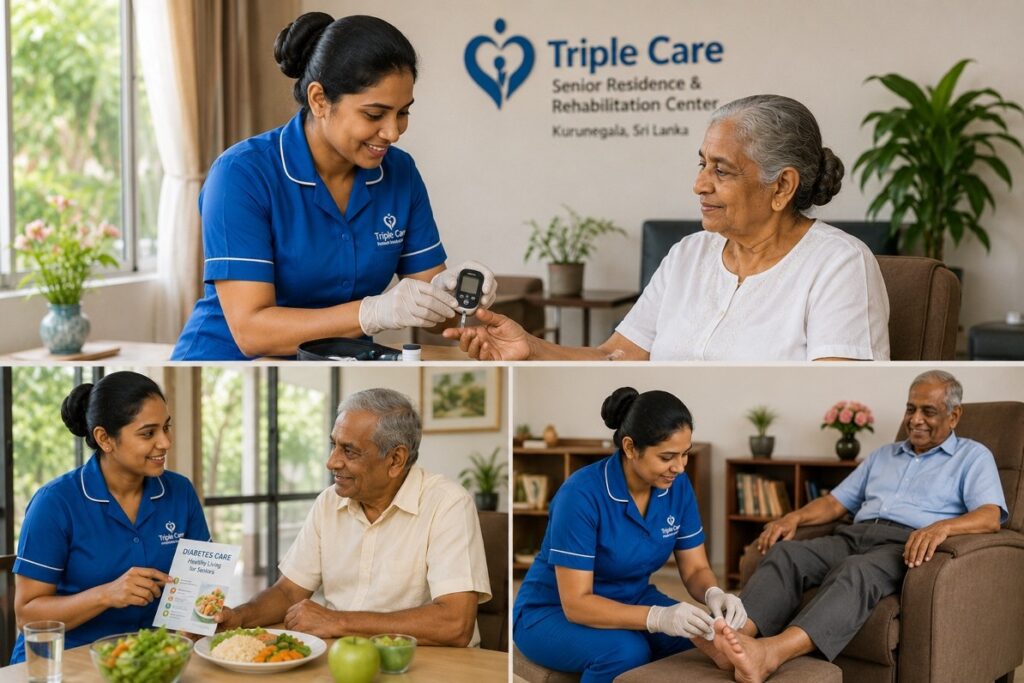
For residents who require monitoring, caregivers may help ensure that the recommended routine is followed and that unusual readings or symptoms are reported appropriately.
Blood glucose targets should also be individualised by healthcare professionals rather than decided by a care facility or family members.
3. Providing Regular, Balanced Meals
Nutrition is an important part of diabetes management.
An elderly person with diabetes should generally follow the eating plan recommended by their doctor or dietitian.
This does not necessarily mean completely avoiding carbohydrates or eating special “diabetic foods.”
Instead, the focus is usually on balanced meals, sensible portion sizes, regular eating patterns, and foods appropriate for the person’s overall health.
For elderly residents, additional considerations may include:
- Reduced appetite
- Difficulty chewing
- Difficulty swallowing
- Weight changes
- Medical dietary restrictions
- Food preferences
- Adequate hydration
An elderly care home with meals and accommodation can help maintain consistent meal times and provide assistance when residents cannot eat independently.
4. Helping Elderly Patients Stay Hydrated
Older adults may sometimes drink less water than they need.
Residents should have reasonable access to drinking water and assistance if they have difficulty obtaining drinks independently.
However, some health conditions may require restrictions on fluid intake. Therefore, any specific medical instructions should always be followed.
5. Supporting Safe Physical Activity
Regular physical activity can form part of diabetes management, but elderly people have very different physical abilities.
Some may be able to walk independently, while others may require assistance, a walking aid, physiotherapy, or supervised movement.
Safe activity may include:
- Short walks
- Gentle mobility exercises
- Physiotherapy exercises
- Activities recommended by healthcare professionals
The appropriate level of activity should take account of the person’s medical condition, mobility, balance, and rehabilitation needs.
Foot Care Is Particularly Important
People with diabetes can develop problems affecting circulation and nerves, which can increase the importance of monitoring the feet.
Elderly patients may also find it difficult to examine their own feet because of reduced vision, limited flexibility, or mobility problems.
Daily care can include paying attention to:
- Cuts
- Blisters
- Swelling
- Redness
- Skin changes
- Unusual pain
- Wounds that are not improving
Any concerning wound or skin change should be assessed by an appropriate healthcare professional.
Families looking for elderly nursing care in Sri Lanka should ask how the facility manages skin care, foot observations, existing wounds, and referrals for professional wound treatment.
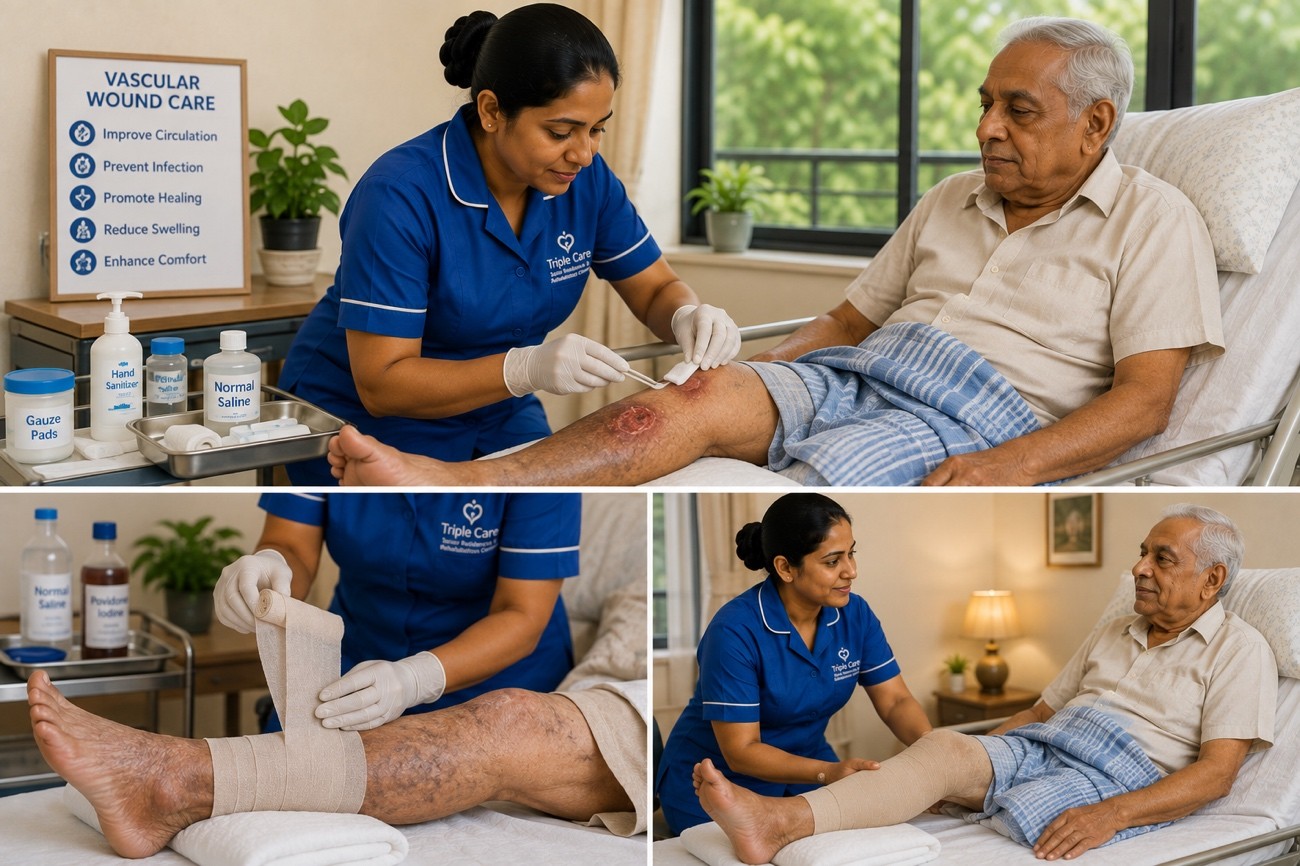
Diabetes and Wound Care in Elderly Patients
Some elderly people with diabetes may develop wounds that require professional treatment.
Caregivers should not attempt to diagnose or independently treat complex diabetic wounds.
Instead, proper medical or nursing assessment may be required.
Good day-to-day support may involve:
- Keeping the resident clean and comfortable
- Following prescribed wound-care instructions
- Protecting dressings
- Monitoring for visible changes
- Helping arrange medical reviews when needed
- Reporting concerns to the family and healthcare professionals
This is particularly important for residents who are bedridden, have limited mobility, or already have vascular or pressure-related wounds.
Recognising Changes in an Elderly Person’s Condition
Families and caregivers should pay attention to unexpected changes in an elderly person’s health.
Possible warning signs that require appropriate medical attention may include:
- Unusual weakness
- Confusion
- Excessive thirst
- Frequent urination
- Significant changes in appetite
- Unexplained weight changes
- Blurred vision
- New wounds
- Slow-healing wounds
- Sudden changes in consciousness or behaviour
Frequent urination, increased thirst, increased hunger, fatigue and blurred vision are among symptoms associated with diabetes, although symptoms can have many different causes and should be assessed appropriately.
Emergency symptoms should always receive urgent medical attention.
Diabetes Care for Elderly People with Dementia
Managing diabetes can become particularly challenging when an elderly person also has dementia or significant memory problems.
They may:
- Forget whether they have eaten
- Forget to take medication
- Take medication more than once
- Have difficulty explaining symptoms
- Refuse food because of confusion
- Forget medical instructions
- Be unable to monitor their own blood glucose safely
In these situations, senior care with nursing assistance or a supervised residential environment may help families maintain a more structured routine.
The exact level of supervision required depends on the person’s dementia, diabetes treatment, mobility, communication ability, and overall health.
Diabetes Care After a Stroke or Surgery
Some elderly patients with diabetes may also be recovering from stroke, surgery, injury, or prolonged illness.
These residents may require both medical follow-up and elderly rehabilitation services.
Depending on professional assessment, rehabilitation may involve:
- භෞත චිකිත්සාව
- Mobility training
- Walking support
- Balance exercises
- Assistance with daily activities
- Gradual return to safe physical activity
Families searching for a rehabilitation center in Kurunegala should discuss both the person’s diabetes and rehabilitation requirements before choosing a care arrangement.
How Professional Elderly Care Can Support Families
Caring for an elderly person with diabetes requires consistency.
Family members may need to coordinate medication, meals, doctor visits, personal care, and safety while also managing employment, children, and other responsibilities.
Professional senior care in Sri Lanka may help by providing a structured daily environment.
Depending on the person’s needs, support may include:
- Accommodation
- Regular meals
- Personal hygiene assistance
- නිවැරදි වේලාවට ඖෂධ ලබාදීමේ සහාය
- Nursing assistance
- Mobility assistance
- Daily observation
- Appointment coordination
- Laundry and housekeeping
- Rehabilitation access
- Assistance communicating health concerns to families
Professional care does not replace the elderly person’s doctor.
Instead, caregivers can help the person follow the medical plan prescribed by qualified healthcare professionals.
Choosing an Elderly Care Home for a Person with Diabetes
If you are searching for an elderly care home in Sri Lanka or elderly care home in Kurunegala, discuss diabetes management before admission.
Ask the care provider:
- Can you support the resident’s medication schedule?
- How are medications recorded?
- Can prescribed blood glucose monitoring be supported?
- What meals are provided?
- Can medically recommended diets be accommodated?
- How are wounds or skin problems handled?
- What happens if a resident becomes unwell?
- Can medical appointments be arranged?
- How are family members informed of concerns?
- Is mobility or physiotherapy assistance available?
You should also provide the facility with accurate information about the person’s medications, diabetes treatment, allergies, medical history, dietary requirements, mobility, and emergency contacts.
Diabetes Care at Triple Care Senior Residence & Rehabilitation Center
Triple Care Senior Residence & Rehabilitation Center in Kurunegala, Sri Lanka provides residential elderly care for people requiring varying levels of day-to-day assistance.
Relevant services and facilities include:
- Shared, single, and air-conditioned room options
- Three main meals and two tea servings each day
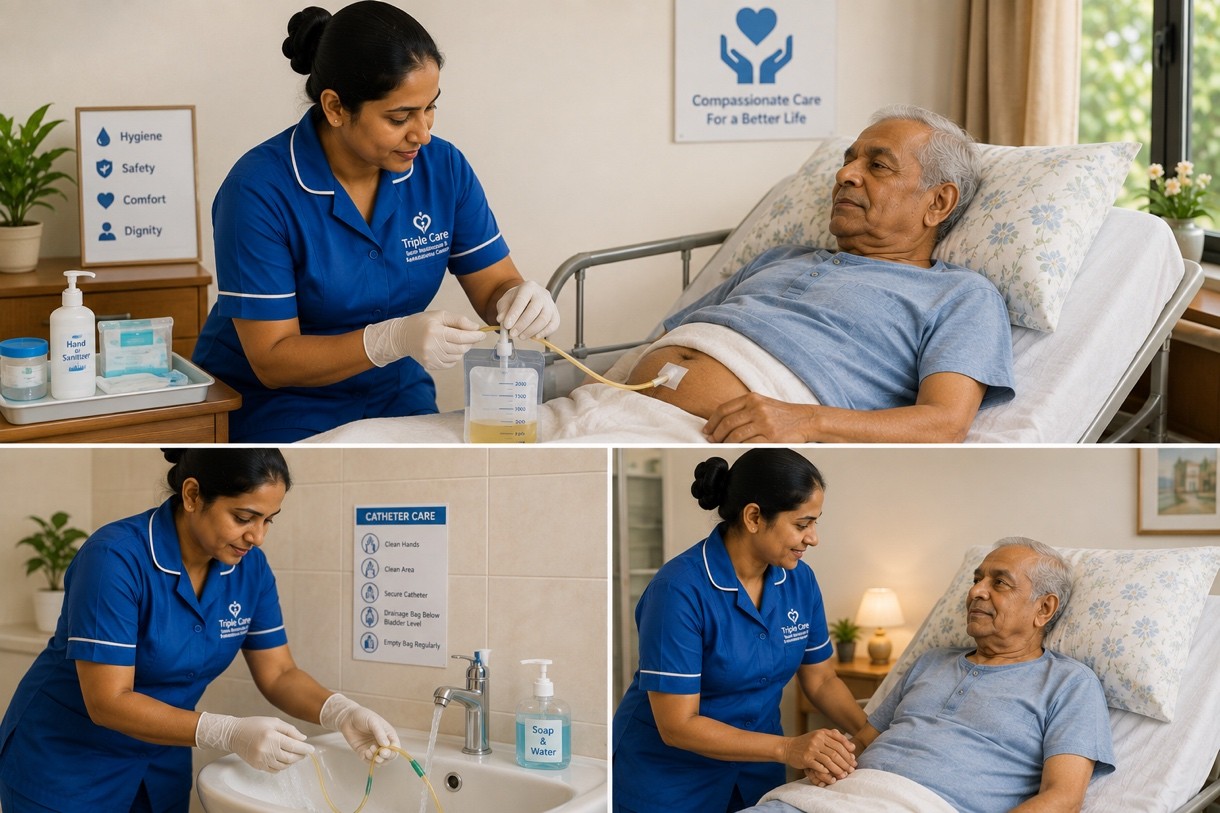
- Nursing attendants available to support residents
- Assistance with personal hygiene and daily activities
- Support with prescribed medication routines
- Laundry and ironing services
- Weekly opportunities for medical review
- Access to external medical treatment when required
- Access to physiotherapy when required
- Support for elderly residents recovering from stroke or illness
- Additional care based on individual requirements
For elderly residents with diabetes, care should continue according to the treatment and dietary instructions given by their doctors and other qualified healthcare professionals.
Families are encouraged to provide complete medical information before admission so the resident’s requirements can be properly discussed.
Long-Term and Short-Term Elderly Diabetes Care
Some families may require long-term elderly care in Sri Lanka when an elderly parent can no longer live independently.
Others may need short-term elderly care in Sri Lanka, for example during recovery from illness or surgery, while a caregiver is temporarily unavailable, or during a transition from hospital to home.
The most suitable arrangement depends on the elderly person’s medical condition, independence, support network, and care requirements.
A Family’s Role Remains Important
Even after an elderly parent moves into a senior residence, family involvement remains valuable.
Families can continue to:
- Attend important medical appointments
- Provide updated medical information
- Visit regularly
- Discuss changes with caregivers
- Bring familiar personal belongings
- Support the resident emotionally
- Participate in important healthcare decisions
Good elderly care works best when residents, families, caregivers, and healthcare professionals communicate clearly with one another.
Finding Elderly Diabetes Care in Kurunegala, Sri Lanka
Managing diabetes in later life often requires a combination of medical treatment, regular routines, appropriate meals, safe activity, personal care, and family support.
For some families, a professional elderly care home in Sri Lanka can provide the structured environment their loved one needs.
If you are looking for elderly diabetes care in Kurunegala, consider the person’s complete care needs rather than diabetes alone. Mobility, memory, nutrition, medication, wounds, rehabilitation needs, and emotional wellbeing can all influence the type of support required.
Triple Care Senior Residence & Rehabilitation Center in Kurunegala provides residential elderly care and rehabilitation support for families seeking professional senior care solutions.
Contact Triple Care
If your mother, father, or another elderly family member has diabetes and now requires additional assistance, contact Triple Care Senior Residence & Rehabilitation Center to discuss their individual care requirements.
You are welcome to enquire about accommodation, nursing assistance, meals, rehabilitation, and elderly care services or arrange a visit to the residence in Kurunegala.
Important: This article provides general educational information and is not a substitute for medical advice. Diabetes medication, blood glucose targets, diet, monitoring schedules, and treatment decisions should be determined by qualified healthcare professionals.
නිතර අසන ප්රශ්න
1. What care does an elderly person with diabetes need?
Care depends on the individual. It may include support with prescribed medication, regular meals, blood glucose monitoring when recommended, personal hygiene, mobility, foot care, medical appointments, and recognising changes in health.
2. Can an elderly person with diabetes live in a care home?
Yes, depending on the person’s medical and care requirements and the services available at the residence. Families should discuss medications, blood glucose monitoring, diet, mobility, wounds, and other health conditions with the care provider before admission.
3. What food should an elderly person with diabetes eat?
There is no single diet appropriate for every person with diabetes. Meals should follow the individual’s medical or dietetic advice, taking into account diabetes, other health conditions, appetite, weight, and nutritional needs.
4. Is nursing care available for elderly diabetic patients in Kurunegala?
Availability varies between facilities. When looking for elderly nursing care in Kurunegala, ask specifically about medication support, monitoring, personal care, wound care arrangements, medical access, and emergency procedures.
5. How do I choose an elderly care home for a parent with diabetes?
Look for a clean and safe residence with appropriate caregivers, regular meals, medication support, healthcare access, clear family communication, and the ability to support your parent’s individual diabetes and mobility requirements.