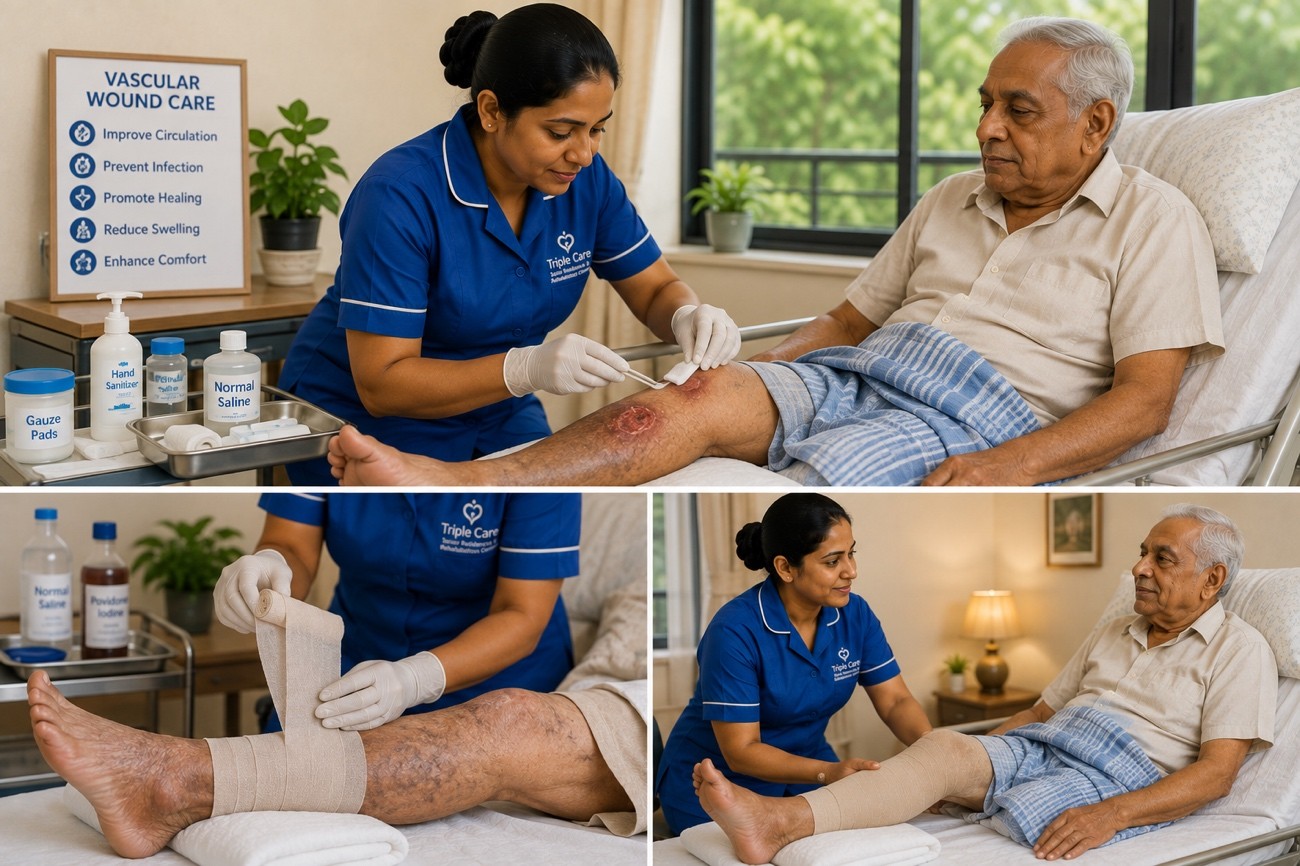


A wound on an elderly person’s leg or foot may sometimes appear to be a simple skin injury. However, when a wound heals very slowly, repeatedly returns, or develops alongside swelling, skin changes, or circulation problems, there may be an underlying vascular issue that requires professional medical assessment.
Vascular wound care for elderly patients can be particularly important because ageing, reduced mobility, diabetes, and conditions affecting blood circulation may increase the risk of difficult-to-heal wounds.
For families searching for elderly nursing care in Sri Lanka, wound care for elderly patients, or elderly care in Kurunegala, understanding vascular wounds can help them recognise warning signs and seek appropriate professional care early.
Vascular wound care for elderly patients can be particularly important because ageing, reduced mobility, diabetes, and conditions affecting blood circulation may increase the risk of difficult-to-heal wounds.
What Is a Vascular Wound?
A vascular wound is a wound associated with problems in blood circulation.
Blood vessels are responsible for carrying oxygen and nutrients throughout the body and returning blood toward the heart. When circulation is affected, tissues in the legs and feet may be more vulnerable to damage or may have difficulty healing after an injury.
Two important categories are:
Venous Wounds
Venous wounds are associated with problems returning blood from the legs toward the heart.
They commonly occur around the lower leg or ankle and may be associated with leg swelling and skin changes.
Arterial Wounds
Arterial wounds are associated with inadequate arterial blood supply to tissues.
They may occur on the feet, toes, heels, or other areas of the lower limb.
Because the underlying causes and treatments differ, families should not attempt to identify or treat the type of vascular wound themselves. Appropriate medical assessment is important.
Why Are Elderly People at Greater Risk?
As people age, they may develop health conditions that affect circulation, mobility, skin condition, and wound healing.
Risk may be increased by factors such as:
- Poor blood circulation
- Diabetes
- Reduced mobility
- Long periods of sitting or lying down
- Previous vascular disease
- Swelling of the legs
- Fragile skin
- Previous leg or foot wounds
- Certain heart or vascular conditions
- Smoking history
- Reduced sensation in the feet
An elderly person may also have several conditions at the same time. This can make wound assessment and ongoing care more complex.
Warning Signs Families Should Not Ignore
Families and caregivers should pay attention to wounds that are not healing as expected.
Possible warning signs include:
- A wound that remains open
- Increasing pain
- Increasing redness or swelling
- Changes in skin colour
- Unusual wound drainage
- Unpleasant odour
- Dark or black tissue
- Persistent leg swelling
- Cold feet or toes
- Changes in the surrounding skin
- Repeated wounds in the same area
If the elderly person develops fever, rapidly worsening redness or swelling, severe pain, significant colour changes, or a sudden deterioration in their general condition, prompt medical attention is important.
Why Proper Assessment Matters
Vascular wounds should not be managed as ordinary cuts without understanding the underlying circulation problem.
A healthcare professional may need to assess:
- The wound’s location and appearance
- Blood circulation
- Swelling
- Skin condition
- Medical history
- Diabetes status
- Medication
- Mobility
- Nutrition
- Signs of infection
Further investigations may sometimes be recommended depending on the person’s condition.
Correctly identifying the underlying problem helps healthcare professionals determine an appropriate treatment plan.
Vascular Wound Care for Elderly Patients
Treatment depends on the cause, severity, circulation, general health, and other medical conditions.
Professional management may include:
- Wound assessment
- Appropriate wound cleaning
- Suitable dressings
- Management of excess moisture
- Skin protection
- Monitoring for infection
- Management of underlying conditions
- Nutritional support
- Mobility advice
- Pressure protection where appropriate
- Regular wound review
Certain treatments used for some venous conditions, such as compression therapy, are not suitable for every patient and may be unsafe when significant arterial disease is present. Such treatment should therefore only be used following appropriate clinical assessment and professional advice.
Vascular Wounds and Diabetes
Diabetes deserves particular attention in elderly wound care.
Some people with diabetes may experience reduced sensation in their feet, meaning a small injury can go unnoticed. Diabetes can also be associated with circulation problems and delayed wound healing.
Families caring for an elderly person with diabetes should regularly observe their feet and skin and report wounds, blisters, colour changes, swelling, or other concerning changes to an appropriate healthcare professional.
A wound in an elderly person with diabetes should not be ignored simply because it is small or painless.
Vascular Wounds vs Bed Sores
Families sometimes confuse vascular wounds with bed sores.
Although both can affect elderly people, they have different underlying causes.
Bed sores or pressure injuries are associated primarily with prolonged pressure and commonly affect areas such as the heels, hips, tailbone, elbows, and shoulders.
Vascular wounds are associated with circulation problems and frequently affect the lower legs, ankles, feet, or toes.
An elderly bedridden person can potentially experience both pressure-related skin damage and vascular problems. This makes professional assessment particularly important when the cause of a wound is unclear.
Daily Care for Elderly People With Vascular Wounds
Medical wound treatment is only one part of supporting an elderly person with a vascular wound.
Depending on their condition, they may also require help with:
- Bathing and personal hygiene
- Dressing
- Toileting
- Continence care
- Medication routines
- Mobility
- Feeding
- Nutrition
- Skin observation
- Position changes
- Foot care
- Attending medical appointments
- Physiotherapy where appropriate
For families managing work, children, and other responsibilities, providing this level of support every day can become challenging.
Nutrition and Hydration
Good nutrition contributes to general health and the body’s normal healing processes.
An elderly person with a wound may need an appropriate diet containing sufficient energy, protein, vitamins, and minerals according to their individual needs.
However, nutritional requirements vary considerably, particularly among people with diabetes, kidney disease, heart disease, swallowing difficulties, or other conditions.
Hydration is also important for many elderly people, but some medical conditions require fluid restrictions.
Families should therefore follow individual medical and nutritional advice rather than making major dietary changes without professional guidance.
How Professional Elderly Care Can Help
An elderly person with a chronic wound may require more than occasional dressing changes.
Professional elderly care in Sri Lanka can provide a structured daily environment where the resident’s personal care, hygiene, meals, mobility assistance, medication routines, and general condition can be observed consistently.
Professional care may be particularly helpful for:
- Elderly people living alone
- Bedridden patients
- Seniors with limited mobility
- People recovering after hospital treatment
- Elderly people with diabetes
- Stroke patients
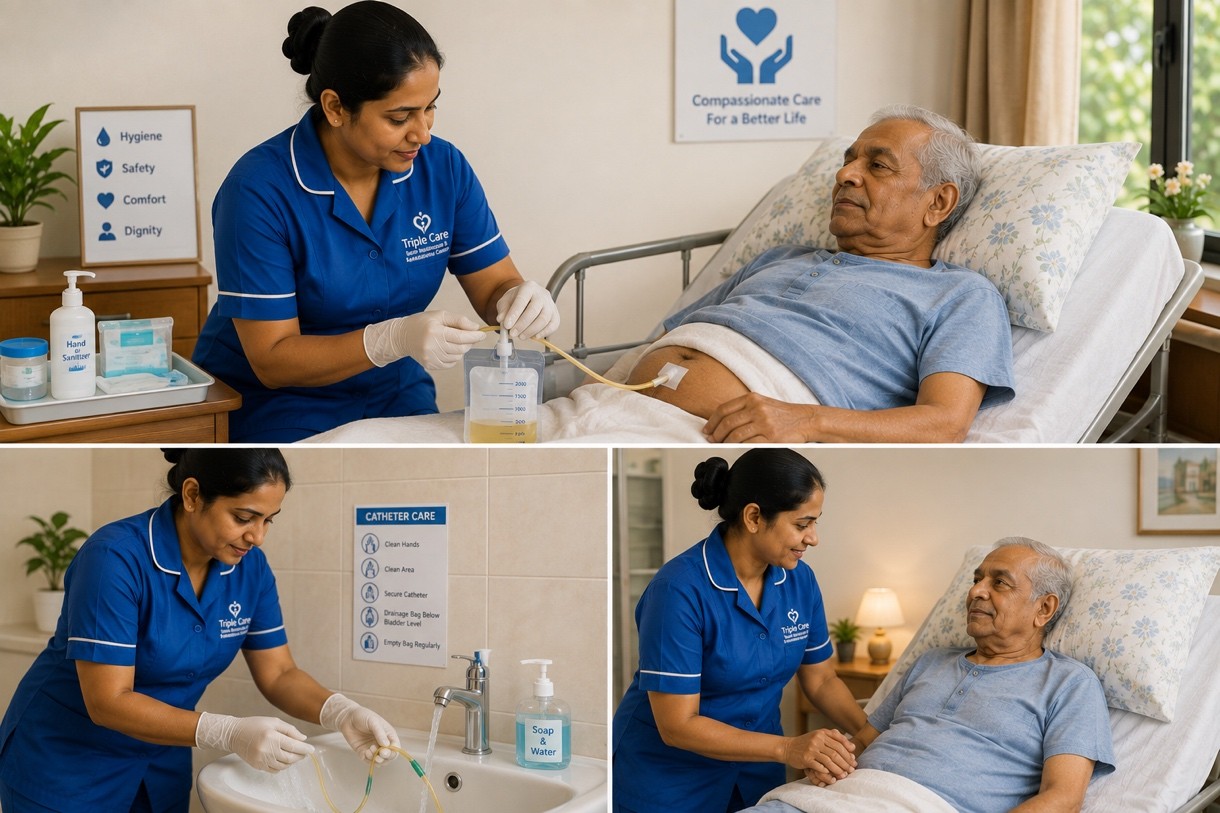
- Seniors requiring catheter care
- Residents requiring assistance with daily activities
- Families who cannot provide continuous care at home
Medical diagnosis and specialised vascular wound treatment should remain under the supervision of appropriately qualified healthcare professionals.
Vascular Wound Support at Triple Care Senior Residence
Triple Care Senior Residence & Rehabilitation Center provides residential elderly care in Kurunegala, Sri Lanka, for senior citizens with varying levels of daily-care needs.
Depending on an individual resident’s requirements, relevant support may include:
- Nursing-attendant assistance
- Support for bedridden residents
- Personal hygiene assistance
- Bathing and dressing assistance
- Diaper and continence care
- Skin and general-condition observation
- නිවැරදි වේලාවට ඖෂධ ලබාදීමේ සහාය
- Feeding assistance where required
- Catheter-related daily care
- Wound-related support according to professional instructions
- Mobility assistance
- Physiotherapy access where appropriate
- Three main meals and two tea servings daily
- Laundry and ironing
- Weekly opportunity for medical review
- Coordination of external medical care when required
For an elderly person with an existing vascular wound, the wound condition, diagnosis, treatment plan, mobility level, and other health conditions should be discussed before admission.
Complex vascular wounds, suspected infections, circulation problems, and specialised wound treatments require assessment and management by appropriately qualified healthcare professionals.
Choosing a Care Home for an Elderly Person With a Chronic Wound
If you are searching for a care home for elderly parents, ask how the facility manages residents with additional nursing or wound-related requirements.
Useful questions include:
- Can the facility support a resident with an existing wound?
- Who monitors changes in the resident’s condition?
- How are prescribed dressing routines supported?
- How are medical appointments arranged?
- What happens if the wound deteriorates?
- Can the facility assist residents with diabetes?
- Is mobility assistance available?
- Can physiotherapy be arranged when appropriate?
- How are medications managed?
- How will the family be informed about significant changes?
A suitable elderly care home in Kurunegala should clearly explain which services it can provide directly and which require external medical professionals.
Supporting Dignity Alongside Medical Care
Chronic wounds can affect more than physical health.
An elderly person may feel worried, embarrassed, frustrated, or dependent on others. Limited mobility can also reduce social interaction and independence.
Caregivers should therefore support the person’s dignity and emotional wellbeing by:
- Communicating respectfully
- Maintaining privacy during personal care
- Encouraging safe independence where possible
- Keeping the person involved in decisions
- Supporting family interaction
- Providing comfortable and clean surroundings
Quality senior care considers the whole person rather than focusing only on the wound.
Conclusion
Vascular wound care for elderly patients in Sri Lanka requires careful assessment because slow-healing wounds can sometimes be connected to underlying circulation problems.
Families should pay attention to persistent wounds, swelling, skin changes, pain, unusual drainage, and other warning signs. Early professional assessment can help identify the underlying cause and guide appropriate treatment.
For families seeking elderly nursing care, residential senior care, or elderly care in Kurunegala, Triple Care Senior Residence & Rehabilitation Center provides daily residential support for elderly people with different levels of dependency.
Contact Triple Care Senior Residence
If your parent or elderly family member has limited mobility, requires daily assistance, or is living with a chronic wound, you can contact Triple Care Senior Residence & Rehabilitation Center to discuss their individual care requirements.
Families are welcome to enquire about residential elderly care, accommodation, nursing-attendant assistance, rehabilitation-related support, and arrangements for residents requiring additional daily care.
You can also arrange a visit to learn more about the care environment available in Kurunegala.
Medical Disclaimer: This article provides general educational information and is not a substitute for diagnosis or treatment by a qualified healthcare professional. Vascular wounds, infected wounds, diabetic foot wounds, and significant circulation problems require appropriate professional assessment.
නිතර අසන ප්රශ්න
1. What is a vascular wound?
A vascular wound is a wound associated with problems in blood circulation. Common categories include venous and arterial wounds. Professional assessment is important because treatment depends on the underlying cause.
2. Why do vascular wounds heal slowly in some elderly patients?
Healing may be affected by reduced circulation, diabetes, poor nutrition, reduced mobility, infection, other medical conditions, and the person’s general health. A healthcare professional should assess persistent wounds.
3. Can elderly patients with vascular wounds stay in a care home?
Depending on the person’s condition and the services available, residential elderly care may provide assistance with daily activities and support prescribed wound-care routines. Specialised treatment should remain under qualified healthcare supervision.
4. Is a vascular wound the same as a bed sore?
No. Bed sores are mainly associated with prolonged pressure, while vascular wounds are associated with blood circulation problems. Professional assessment can help identify the wound type and appropriate treatment.
5. Where can families find elderly care in Kurunegala for someone with a chronic wound?
Families can look for elderly care services that can support daily hygiene, mobility, meals, medication routines, and coordination of professional healthcare. Triple Care Senior Residence & Rehabilitation Center in Kurunegala can discuss individual care requirements before admission.