



Caring for ageing parents is an important responsibility for many Sri Lankan families. Most families want their parents or grandparents to remain comfortable, safe, respected, and surrounded by people who care about them.
However, as a person grows older, their care requirements can change. They may need assistance with walking, bathing, dressing, medication routines, meals, toileting, or other everyday activities. Some elderly people may also live with dementia, diabetes, stroke-related disabilities, chronic wounds, catheter requirements, or reduced mobility.
At this point, families may begin considering an elderly care home in Sri Lanka.
Choosing residential care does not mean stepping away from caring for a parent. For some families, it can be a practical way of ensuring that an elderly loved one receives consistent daily support while family members remain actively involved in their life.
This guide explains when an elderly care home may be appropriate, what families should look for, and how professional senior care in Sri Lanka can support both elderly people and their families.
An elderly care home is a residential environment designed to support senior citizens who may require assistance with daily living.
Depending on the facility and the resident’s needs, services may include accommodation, meals, personal care, mobility assistance, medication routine support, nursing-attendant assistance, recreational activities, and coordination of healthcare services.
Different people require different levels of support.
Some residents may be relatively independent but prefer the security and companionship of a senior residence in Sri Lanka. Others may require substantial assistance because of limited mobility, illness, dementia, stroke, or other age-related conditions.
Therefore, choosing a care home should always begin with understanding the individual needs of the elderly person.
There is no single correct time to consider residential elderly care.
However, certain situations may indicate that additional support would be helpful.
An elderly person living alone may have difficulty responding to emergencies, preparing meals, taking medication correctly, or moving safely around the home.
Falls, confusion, weakness, or reduced vision can make independent living more challenging.
A structured senior living environment may provide greater day-to-day support.
Ageing can make ordinary activities increasingly challenging.
An elderly person may need help with:
- Bathing
- Dressing
- Toileting
- Grooming
- Walking
- Getting in and out of bed
- Eating
- Continence care
- Medication routines
When assistance is required throughout the day, professional elderly care may provide more consistent support than occasional help.
Caring for an elderly person with dementia can become increasingly complex.
They may forget medication, meals, appointments, or familiar routines. Some people may become confused about time and place or require closer supervision for their safety.
Families searching for dementia care in Sri Lanka or dementia care in Kurunegala should look for a care environment that is patient, respectful, structured, and able to support the person’s individual needs.
Bedridden and mobility-limited elderly people can require considerable daily assistance.
Their care may involve:
- Regular repositioning
- Personal hygiene
- Feeding assistance
- Diaper changes
- Skin observation
- Pressure sore prevention measures
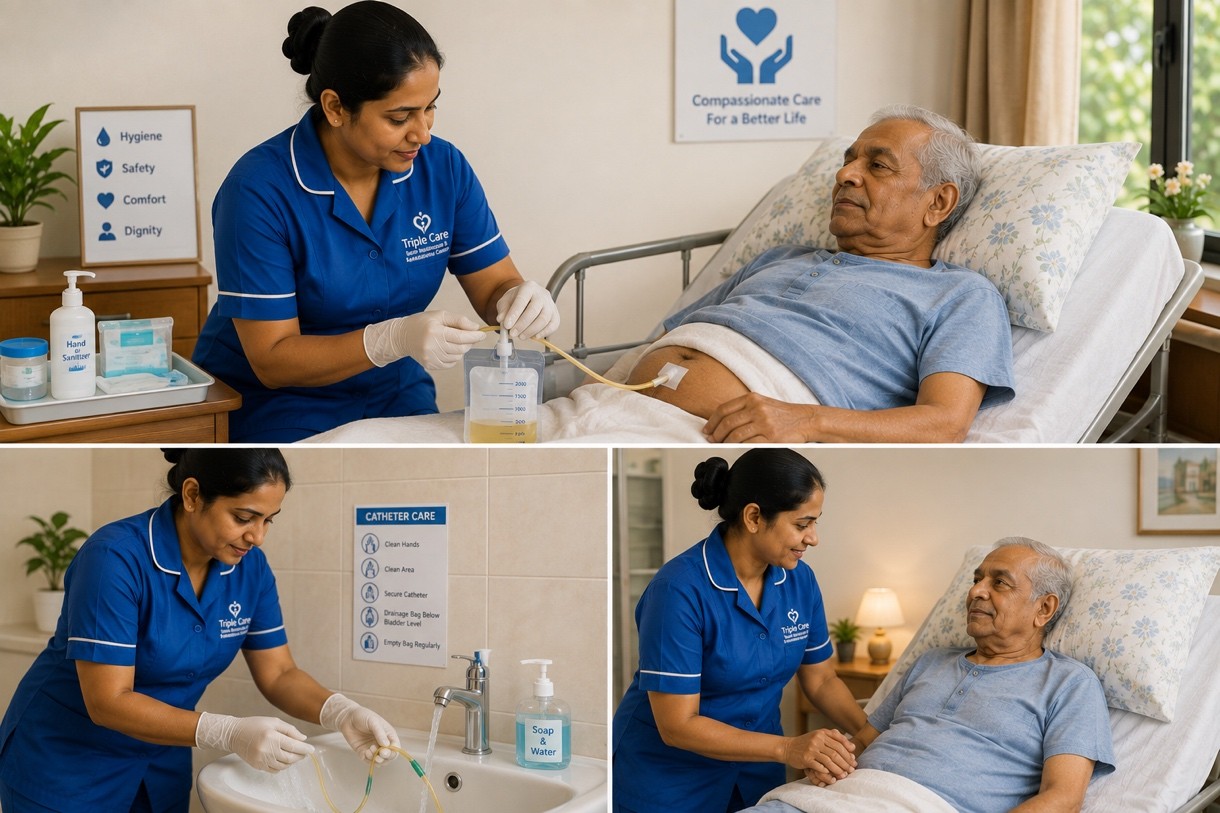
- Catheter-related care where required
- Mobility assistance
- Physiotherapy when appropriate
Providing this level of care continuously at home can be difficult, particularly when family members are working or living elsewhere.
Many Sri Lankan families genuinely want to care for their parents at home but face practical limitations.
Family members may work full-time, live in another city, or live overseas. Others may be caring for children while managing work and household responsibilities.
Professional elder care services in Sri Lanka can help families ensure that their loved one receives consistent daily assistance while maintaining regular family involvement.
The purpose of a good care home should be to support the elderly person’s safety, comfort, dignity, daily routine, and quality of life.
One of the main benefits of residential elderly care is having support available for everyday activities.
Rather than depending on one family member to manage everything, residents can receive assistance according to their individual needs.
Preparing appropriate meals every day can become challenging for elderly people living alone.
An elderly care home with meals and accommodation can provide a regular meal routine while staff can also observe whether residents are eating adequately.
Individual medical or dietary requirements should be discussed with the care provider.
Older people may take several medications at different times.
Forgetting medication or taking it incorrectly can create health risks. Depending on the facility’s scope of services, staff may assist residents in following prescribed medication routines and coordinate with healthcare professionals when required.
Bathing, dressing, grooming, toileting, and continence care can become difficult for elderly people with reduced mobility.
Professional caregivers can assist with these activities while respecting the resident’s privacy and dignity.
Living alone can sometimes lead to loneliness and reduced social interaction.
A senior residence provides opportunities to interact with caregivers and other residents, participate in suitable activities, and maintain a daily routine.
Family visits and communication remain an important part of emotional wellbeing.
Not every senior citizen requires the same type of care.
Some residents may require additional support because of:
- Dementia
- Diabetes
- Stroke
- Reduced mobility
- Bedridden conditions
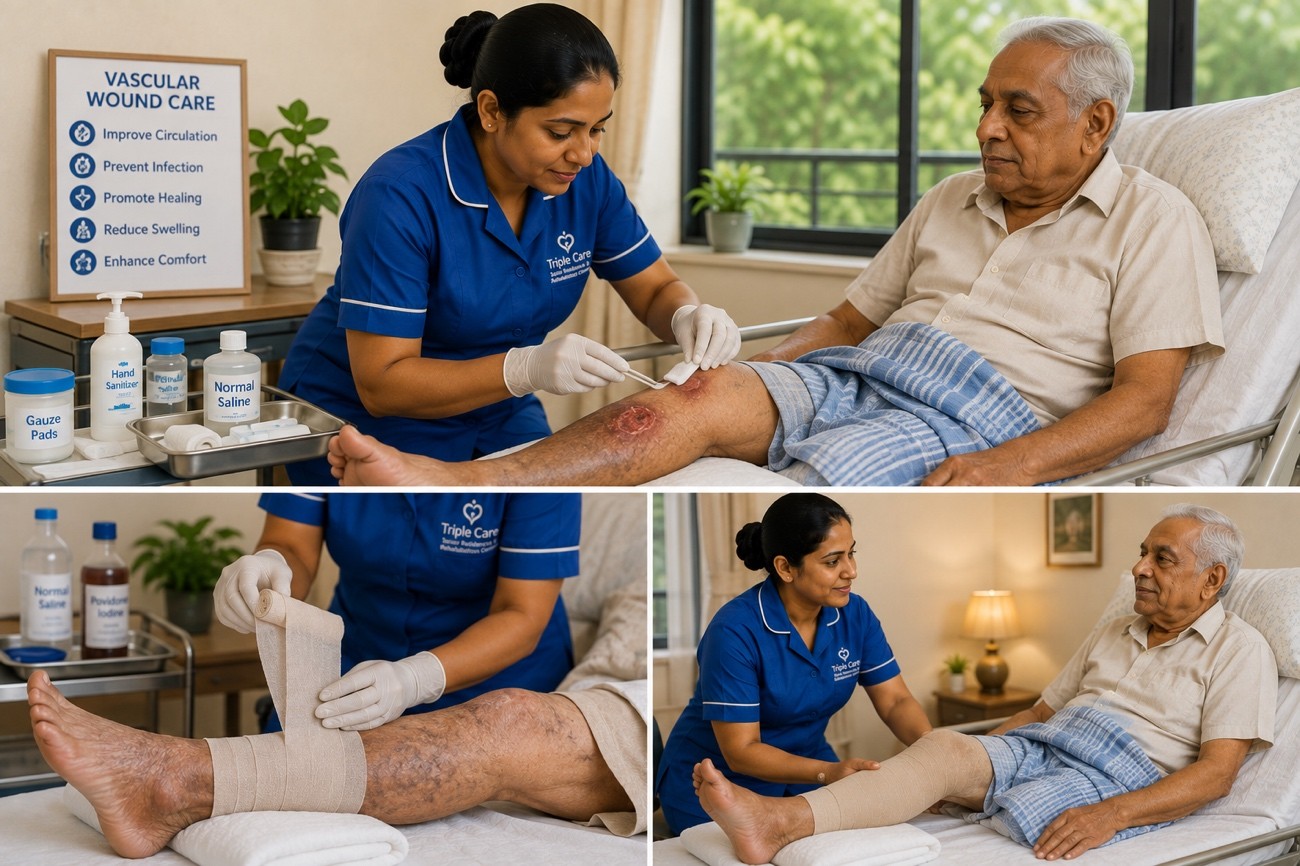
- Chronic wounds
- Bed sores
- Catheter use
- Feeding difficulties
- Continence problems
- Recovery following illness, surgery, or hospitalization
When choosing nursing care for elderly parents, families should clearly discuss the person’s medical history, mobility, medication, dietary needs, and existing health conditions with the care provider.
Specialised medical treatment should remain under the supervision of appropriately qualified healthcare professionals.
Some elderly people may require rehabilitation following a stroke, surgery, hospitalization, injury, or period of prolonged immobility.
Depending on the individual’s condition and medical advice, rehabilitation may involve physiotherapy, mobility exercises, assistance with walking, or activities intended to support daily functioning.
Families searching for a rehabilitation center in Kurunegala should ask how rehabilitation services are arranged, who provides them, and whether the program can be adapted to the elderly person’s needs.
Choosing a care home for elderly parents is an important decision. Families should ideally visit the facility before making a final choice.
Consider the following areas.
Observe the bedrooms, bathrooms, dining areas, common spaces, and outdoor areas.
The environment should appear clean, organised, comfortable, and appropriate for elderly residents.
Ask about fall prevention, bathroom assistance, emergency procedures, and how staff respond when a resident becomes unwell.
Talk to the caregivers and management.
Ask:
- Who provides daily care?
- Is assistance available during the night?
- How are medications handled?
- How are health changes reported?
- What happens during an emergency?
- How are bedridden residents supported?
- How are families kept informed?
Good communication between the care home and family is important.
A comfortable living environment can help elderly residents feel more settled.
Ask about available room options, bathroom facilities, ventilation, privacy, accessibility, cleaning, laundry, and common areas.
Ask how many meals are provided each day and whether special dietary requirements can be accommodated where appropriate.
Understand what healthcare-related support is available within the facility and what services require external healthcare professionals.
Families should also ask how doctor visits, hospital appointments, physiotherapy, and emergencies are coordinated.
For families looking for elderly care in Kurunegala, Triple Care Senior Residence & Rehabilitation Center provides residential senior care for elderly people with different levels of daily-care requirements.
Depending on the resident’s individual needs, services include:
- Shared, single, and air-conditioned room options
- Three main meals and two tea servings daily
- Laundry and ironing
- Nursing-attendant assistance
- Assistance with bathing and personal hygiene
- Feeding assistance where required
- Diaper and continence care
- Support for bedridden residents
- Catheter-related daily care
- Support for residents with dementia
- Support for residents recovering from stroke
- Wound-related daily-care support according to professional instructions
- Weekly opportunity for medical review
- Access to external medical treatment when required
- Physiotherapy arrangements when appropriate
Before admission, families should discuss the elderly person’s medical history, current medications, mobility, dietary needs, existing wounds, dementia-related needs, catheter requirements, and other relevant conditions.
This allows the care requirements to be considered before residential arrangements are made.
Families may require elderly care for different reasons.
Some people require long-term elderly care in Sri Lanka because living independently is no longer practical.
Others may need short-term elderly care in Sri Lanka while recovering after hospitalization or while their usual caregiver is temporarily unavailable.
When contacting a senior residence, explain the reason for care, expected duration, and level of assistance required so the facility can determine whether it can appropriately support the resident.
This is an understandable concern for many Sri Lankan families.
Choosing professional care does not have to mean reducing family involvement.
Family members can continue to:
- Visit regularly
- Call and speak with their loved one
- Participate in important decisions
- Attend medical appointments where possible
- Celebrate birthdays and special occasions
- Bring familiar personal items
- Spend quality time together
A care home can manage many daily physical-care responsibilities while the family continues providing emotional connection, companionship, and involvement.
The goal should be to find the care arrangement that appropriately supports the elderly person’s needs, dignity, comfort, and safety.
Deciding whether to move a parent or elderly family member into residential care is a significant family decision.
The right choice depends on the person’s health, independence, mobility, daily-care requirements, family circumstances, and personal preferences.
When comparing an elderly care home in Sri Lanka, senior residence, assisted living facility, or nursing home, families should look beyond accommodation alone. Consider the quality of daily assistance, cleanliness, meals, communication, safety, staff support, medical coordination, and the dignity with which residents are treated.
For families looking for elderly care in Kurunegala, Triple Care Senior Residence & Rehabilitation Center provides residential care and daily assistance for elderly people with a range of support requirements.
If you are considering professional care for your parent, grandparent, or another elderly family member, contact Triple Care Senior Residence & Rehabilitation Center to discuss their individual requirements.
You can enquire about accommodation, daily elderly care, nursing-attendant assistance, bedridden patient care, dementia support, rehabilitation-related services, meals, and other available care arrangements.
Families are also encouraged to arrange a visit before making a decision so they can see the environment, discuss their concerns, and determine whether the residence is suitable for their loved one.
Visit the facility where possible and evaluate cleanliness, safety, staff support, accommodation, meals, daily-care services, medical coordination, communication with families, and the overall environment. Discuss your parent’s individual health and care requirements before admission.
Services vary between facilities but may include accommodation, meals, personal hygiene assistance, mobility support, medication routine assistance, continence care, nursing-attendant support, social interaction, and coordination of medical or rehabilitation services.
Costs vary according to the facility, room type, location, level of assistance, and additional care requirements. Families should request a clear breakdown of accommodation fees, included services, and charges for additional care before making a decision.
Some elderly care homes provide nursing-attendant assistance and support for residents with additional care needs. The exact level of nursing and medical care varies, so families should discuss the person’s condition directly with the care provider.
Families can find residential senior care, accommodation, daily living assistance, nursing-attendant support, bedridden patient care, dementia-related support, physiotherapy arrangements, and other elderly care services in Kurunegala. Available services should be confirmed directly with each provider.